







-
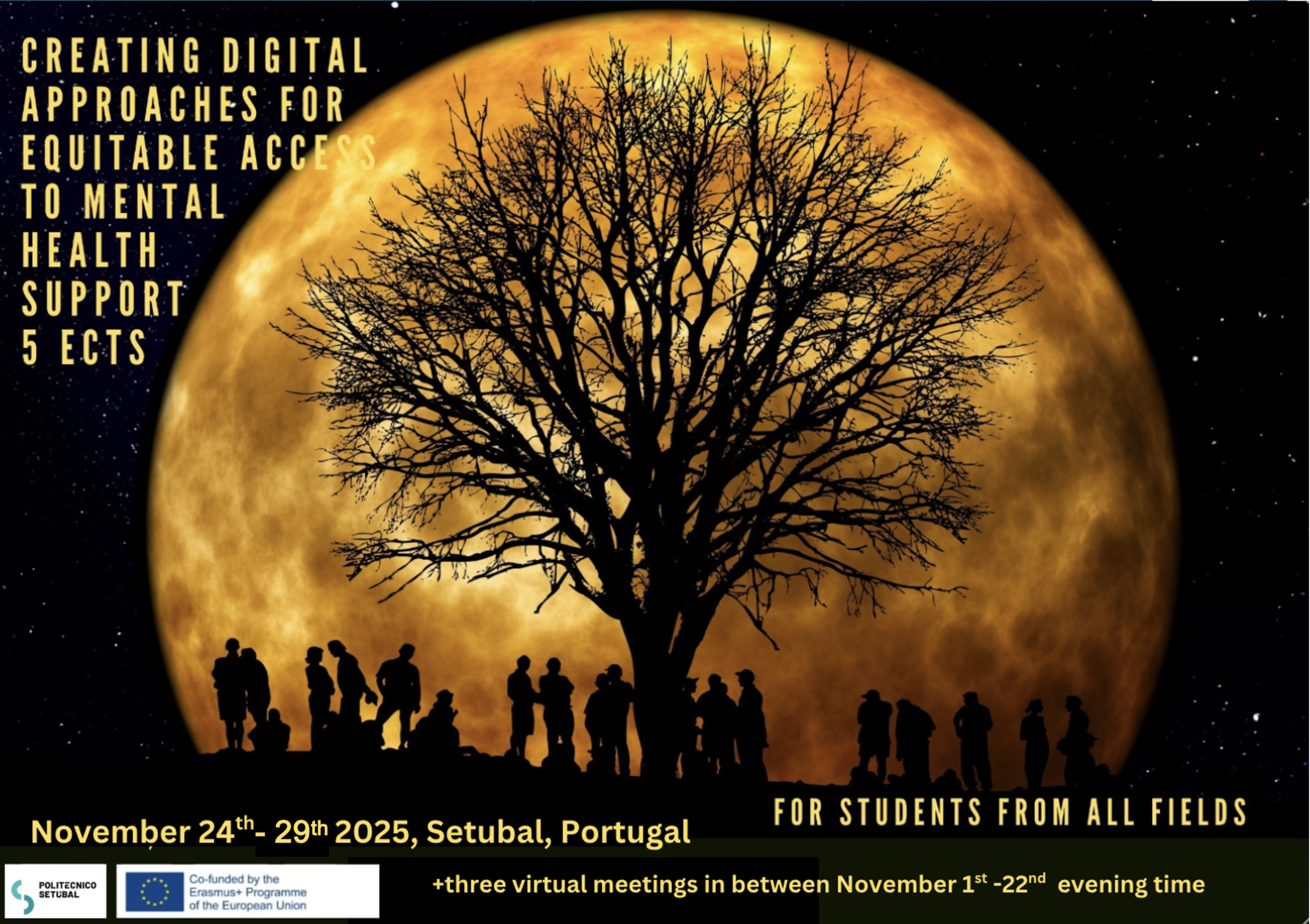
Creating digital approaches for equitable access to mental health support
Number of participants: 20
Partners:
- Oulu University of Applied Sciences, Finland
- University of Bacău, Romania
- UC Leuven-Limburg University of Applied Sciences, Belgium
ECTS credits: 5
Learning Outcomes - At the end of the programme the PARTICIPANT is able to:
- Support people with mental health challenges, aligning their approach with the person’s culture and values
- Explain how team decisions connect to societal needs and emerging trends
- Apply knowledge on mental health determinants and epidemiology (at global, European, and national levels) to justify concepts
- Design and effectively apply digital mental health intervention projects using the Human-Centered Design process
- Select appropriate validation methods during concept development
- Differentiate and integrate everyday knowledge with evidence-based knowledge in a balanced and respectful way
- As a member of an interdisciplinary team, describe how interdisciplinarity can contribute to the innovative development of products and services in mental health
Course Coordinator: Bruno Ferreira bruno.ferreira@ess.ips.pt
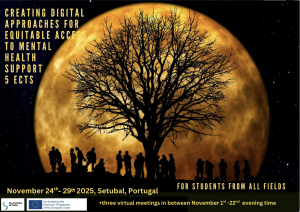 Flyer with further information: HERE
 -
Challenges of the future in paediatric rehabilitation: diversity and inclusion
 Number of participants: 20
Partners:
- Oulu University of Applied Sciences (Finland);
- Artevelde University of Applied Sciences (Belgium);
- University of Ghent (Belgium);
- Western Norway University of Applied Sciences (Norway)ECTS credits: 3
Learning Outcomes - At the end of the course the STUDENT should demonstrate:
- Advanced Knowledge and understanding of the different aspects of early childhood development. Advanced knowledge and understanding of common clinical paediatric conditions.
- Ability to create innovative and socially adequate responses to specific health problems of specific children.
Ability to plan client focused strategies. - In-depth reflection of their learning experience.
Strategies to transfer this learning experience into their own reality. Strategies to work on and off-line in an international setting. - In- depth reflection on similarities and differences in health and educational systems in Europe.
Course Coordinator: Aldina Lucena, aldina.lucena@ess.ips.pt
Course Flyer: HERE
-
From Disability into Ability: experience-based learning in real context
Number of participants: 20
Partners:
- Oulu University of Applied Sciences (Finland);
- Artevelde University of Applied Sciences (Belgium);
- Universitat Central Catalunya - VIC (Spain);
- Odissee (Belgium);
- Metropolia University of Applied Sciences (Finlandia);
- PXL (Belgium)ECTS credits: 4
Learning Outcomes - At the end of the course the STUDENT should be able to:
- Demonstrate knowledge of ones’ own social and health system.
- Demonstrate a deep understanding of the concepts of client centred care, social participation, empowerment, ability, and disability.
- Demonstrate a deep understanding of the various enablers and barriers to social participation and full citizenship
- Demonstrate the ability to develop an inter-professional response to a real-life situation, where social participation is compromised.
- Demonstrate the ability to transfer the experience to one’s own context.
- Demonstrate the ability to reflect on one’s own learning experience both in an inter-professional and inter-cultural perspective.
- Demonstrate enhanced linguistic skills in the use of English as a working language.
-
Intensive Programme on Palliative and End of Life Care
Person of contact at ESS/IPS - Prof. Hugo Franco hugo.franco@ess.ips.pt
Coordinated by Artevelde University of Applied Sciences, Gent, Belgium
ECTS credits: 3
-
International Programme in Pediatric Rehabilitation
Person of contact at ESS/IPS:
Prof Madalena Gomes da Silva
Coordinated by Artevelde University of Applied Sciences, Gent, Belgium
ECTS credits: 3
-
Busiskills - Wellbeing@Work
Person of contact at ESS/IPS - Prof Helena Caria helena.caria@ess.ips.pt
Coordinated by Hénallux - Haute école, Namur, France
ECTS credits: 4
Expected dates: soon
-
Patient Handling in Safe and Rehabilitating Way
Coordenado por: Oulu University of Applied Sciences, Oulu, Finlandia
Docente de contacto: Aldina Lucena aldina.lucena@ess.ips.pt
-
Diversity and Social Inclusion
Coordenado por: COHEHRE
Docente de contacto: António Freitas antonio.freitas@ess.ips.pt